
In the chapter, Informal, Formal and Intensive Practices, Ronald Siegel gives a baseline for mindfulness and ways to practice meditation in daily life. Siegel defines mindfulness as more about being and less about doing. He explains that when we are present, many unwanted or unpleasant thought can arise. Most people rather keep themselves busy and push away those thoughts. Siegel explains mindfulness is slowing down, being present and paying attention. “Mindfulness is a dose practice,” says Siegel, meaning that if you do a little meditation you will get a little more mindful. If you do more mediation, you will become much more mindful.
I learned that multi-tasking is actually not as effective as we thinking. According to cognitive science, when we multi-task between two things, each receives 50% of our attention, same if we do 4 things at once, each gets 25% of our attention. I learned that part of mindfulness is single-tasking, meaning only doing one task at a time so you can be intentional and fully present. I also learned that there are ways to practice meditation in all aspects of our life. These are known as informal, formal and intensive meditations. Informal mediations are the idea of being present during every task such as, showering, cooking, driving or brushing our teeth. While we participate in these, usually mindless activities, we can decided to bring our focus to the activity. Showering can be a great informal practice by focusing on the water hitting your body, the warmth on your skin and the relaxed sensation that often comes with showering. Formal meditation practice is when we take time our of the day to just practice our mindfulness through guided meditations or deep breathing. Intensive practice is when we go on a retreat and practice mindfulness in a continuously for many days at a time. This new information helped answer my content questions and gives me more insight around mindfulness and different types of meditations.
Siegel, R. D. (2013). Lecture 3: Informal, Formal and Intensive Practices. In The Science of Mindfulness: A Research-Based Path to Well-Being (The Great Courses). The Teaching Company.
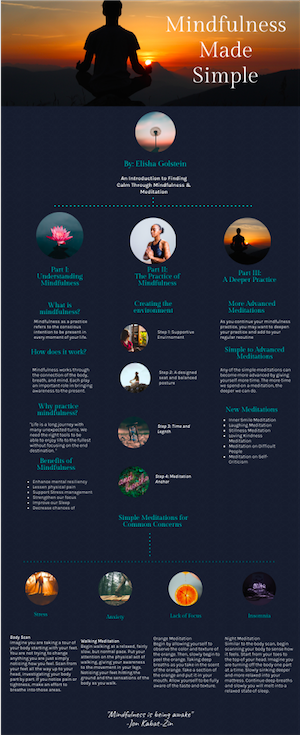
 Mindfulness, Meditation & Yoga